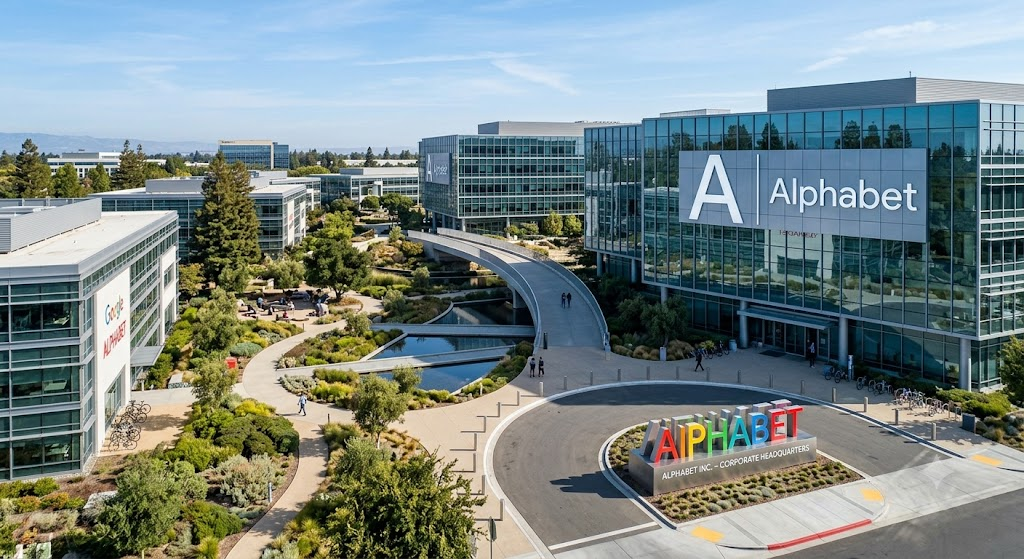
On paper, Alphabet’s latest quarter looked like an absolute masterclass in execution. A complete “triple beat”—topping revenue, net income, and forward guidance across the board.
Yet, within hours of the release, Alphabet’s stock plunged ~7%, wiping out tens of billions in market value overnight.
How does the world’s most lucrative cash-printing engine deliver record-breaking numbers only to get hammered by Wall Street? The answer lies in a fundamental shift in Alphabet’s business model, an inescapable AI prisoner’s dilemma, and a stark divide between who is capturing value in the AI ecosystem today.
1. The Numbers: Perfect Headlines, Strained Reality
To understand Wall Street’s reaction, look at the contrast between Google’s top-line growth and its underlying cash dynamics:
| Financial Metric | Reported Result | YoY Performance / Impact |
| Q2 Revenue | $119.8 Billion | +24% YoY (12 consecutive months of double-digit growth) |
| Operating Margin | 34% | Expanded across core service divisions |
| Google Cloud Growth | +82% YoY | Accelerated from 48% and 63% in prior quarters |
| Net Income Growth | +298% YoY | EPS reached $9.11 |
| Cloud Backlog | $514 Billion | Record high backlog reported |
| Quarterly CapEx | ~$45 Billion | FY guidance raised to $195B – $205B |
If you only look at revenue and earnings per share, the stock should have rallied 5%. But fund managers looked deeper into where the cash was actually going.
2. The Three Red Flags Driving Wall Street’s Sell-Off
Red Flag #1: From Asset-Light Money Machine to Heavy-Asset Utility
For two decades, investors loved Google because it was an asset-light business. Search and ads generated endless waterfall cash flow without requiring heavy capital investment. Money went straight to share buybacks and dividends.
Today, Google is transforming into an AI infrastructure utility.
- Exploding CapEx: Single-quarter CapEx hit $45 billion, with full-year guidance raised to $195B–$205B.
- Dilution & Debt: Alphabet raised ~$50 billion through debt and equity issues in the first half of the year, with plans for another $40 billion share issuance program—diluting existing shareholders to fund AI data centers, custom TPU chips, and cooling systems.
Every dollar Google prints is increasingly locked inside data center hardware rather than returning to shareholders.
Red Flag #2: The $514B Backlog Loss of Visibility
While a $514 billion backlog sounds impressive, Alphabet combined traditional Cloud SaaS contracts, AI infrastructure leasing, and future multi-year TPU hardware deliveries into a single backlog figure for the first time.
Traditional enterprise cloud revenue comes with predictable, high margins. Custom TPU hardware and raw compute leasing carry uncertain delivery schedules, fluctuating hardware depreciation, and unproven long-term return on invested capital (ROIC). Wall Street hates reduced visibility.
Red Flag #3: The AI Prisoner’s Dilemma
Search generates the lion’s share of Alphabet’s cash, but Search is also the primary target for generative AI disruption from OpenAI, Anthropic, Meta, and xAI.
Google is trapped in a classic Prisoner’s Dilemma:
- If Google stops spending $200B/year on AI: It risks ceding its Search empire to AI-native competitors, risking corporate mortality.
- If Google keeps spending $200B/year on AI: It burns through free cash flow, dilutes equity, and sacrifices margins.
Alphabet has no choice but to escalate its capital spending year after year, with no visible finish line or guaranteed monetizable outcome.
Key Takeaway: Wall Street isn’t rejecting AI—it’s asking when hyperscaler CapEx will translate into incremental, high-margin cash flow rather than defensive spending.
3. Upstream Bottlenecks vs. Downstream Hyperscalers
While Google is forced to raise capital to buy compute, the companies providing the physical bottlenecks are enjoying unprecedented pricing power.
Contrast Alphabet’s capital strain with the hardware and packaging leaders supplying the AI boom:
- Intel: Datacenter & AI revenue surged +59%, with management noting demand completely outstrips capacity—allowing them to lock customers into long-term pricing agreements upfront.
- Amkor Technology: Soared after receiving $1.5 billion in advance payments from Nvidia just to reserve advanced packaging capacity.
- Equipment Monopolies: Semiconductor equipment makers like ASML, Applied Materials, and Lam Research hold near-monopolistic technological moats. Hyperscalers are competing to hand them capital, rather than the other way around.
4. The Hidden Risk for Hardware Investors
Does this mean investors should simply dump software hyperscalers and buy AI hardware forever? Not quite.
Here is the counter-intuitive risk: Hardware suppliers are only as healthy as their ultimate spenders.
If Wall Street continues to punish hyperscalers for surging CapEx without clear ROI, hyperscalers will eventually be forced to rein in their spending. When the largest cloud providers pare back hardware orders, hardware suppliers lose their pricing power overnight.
Final Thoughts
Alphabet’s latest quarter proves that having a great quarter isn’t enough in the AI era. The market is transitioning from rewarding AI promises to scrutinizing Capital Efficiency.
Until hyperscalers can demonstrate that their massive AI infrastructure buildout yields expanding net cash flows—rather than defensive survival spend—their stock multiples will remain under pressure.
*** SEE MY TRADES & PORTFOLIO ON PATREON ***
If you are interested to find out more about my trades, what shares I am buying/ selling or which options contracts I have opened/ closed, I will be updating them on Patreon (on the same day I made the trades), so do follow me there if you need some reference or inspiration.
Click here to access my Patreon page
*** FOLLOW US ON SOCIAL MEDIA ***
Follow me on Facebook and LinkedIn, to get notified of my latest posts on social media. Or subscribe to my blog (scroll to the bottom of the page) to have my new posts sent directly to your mailbox.
We also have a community passionate about investing, trading, and personal finance over our Telegram or Facebook group. So, join us there for a good discussion, post queries, or simply share your financial knowledge.
*** FREE BEGINNER GUIDE TO OPTIONS TRADING ***
Keen to learn about options trading but do not wish to pay for expensive courses, this newbie guide will help gain the knowledge and fundamentals to understand options better. And it’s totally free!
The Newbie’s Guide To Options Trading
*** FREE MOTIVATIONAL BOOK ***
If earning more money from your investment does not excite you anymore, you may be seeking a purpose that brings fulfillment and meaning in life. I have written a motivational book that may be useful to you in some ways.
Click here to download my motivational book
*** BUY ME A CUP OF COFFEE ***
If my blog has benefited you in some ways and you would like to offer a token of appreciation, you may do so via this page. Thank you very much for your support!
Click here to support the site
If earning more money from your investment does not excite you anymore, you may be seeking a purpose that brings fulfillment and meaning in life. I have written a motivational book that may be useful to you in some ways.
Click here to download my motivational book
*** MUST-READ BLOG POSTS ***
The day that I lost everything….
I Was Margin Called, IBKR Liquidated ALL My Positions & Realised S$540k (USD400k) Worth Of Losses
Sharing these 6 fatal mistakes in investing and options trading so you can avoid these pitfalls
The 6 Fatal Investing/ Trading Mistakes That Made Me Lose More Than $1M
After accumulating more than 600k of unrealized losses on my portfolio, I wrote this article to encourage friends and investors who are also losing a lot of money to the market.
If You Are Feeling Depressed From Losing Lots Of Money In The Stock Market, Here’s An Article For You
The precious 6 lessons I learnt after cutting more than half a million of losses in the stock market through bad investments and risky trades.
6 Lessons Learnt After Losing 551k In 10 Years Of Investing & Options Trading | What Newbies Should Know They Start Investing/ Trading
In the 10 years of my investing journey, I have made many mistakes but also learned many lessons from these mistakes. I compiled the 10 most valuable lessons that I have learned and may they help you succeed in your investing journey.
Happy 10 Years Of Investing | 348k (Realised) Profit, 635k (Unrealized) Loss & 10 Lessons Learnt
How I managed to build a 1M investment/ trading portfolio despite coming from humble beginnings.
How A Poor Kid Got To A 1M Investment Portfolio | Tips & Principles Of Building Wealth
I did these 10 side hustles while holding a full-time job, so I share them here so you can be inspired to grow your wealth through a side hustle that you enjoy.
I Did These 10 Side Hustles While Working Full Time | 10 Side Hustle Ideas To Help You Earn An Extra Income
Struggling with inflation and high cost of living? Try these 10 methods to help you save money and accumulate more savings for investments or rainy days.
10 Ways To Save Money To Help You Fight Inflation & Rising Costs Of Living
Why I am building $120,000 of cash reserves in Singapore Savings Bonds (SSB) & 5 reasons why I think SSB is a worthy low or zero-risk investment that you can consider.
Why I Am Building $120,000 Of Cash Reserves In Singapore Savings Bonds (SSB)? | 5 Reasons Why SSB Is A Worthy Low-Risk Investment

