

We’ve all been there. You’re prepping for an overseas holiday, looking through your wallet, and trying to play the credit card optimization game.
For the longest time, my go-to strategy seemed obvious. I have the Standard Chartered Manhattan card, which dangles a very shiny 3% cash rebate on spending. On paper, using a 3% cashback card while shopping in Tokyo, JB, or London sounds like a no-brainer.
But on my recent trips, I completely switched gears. I stopped pulling out my Manhattan card and started exclusively tapping my Trust Bank card instead.
Why would anyone walk away from a 3% rebate? Because when you look at the hidden math of overseas spending, that 3% rebate is actually a trap. Here is why the Trust card is my absolute favorite travel companion now.
The Hidden Math: Standard Chartered Fees vs. Trust Bank
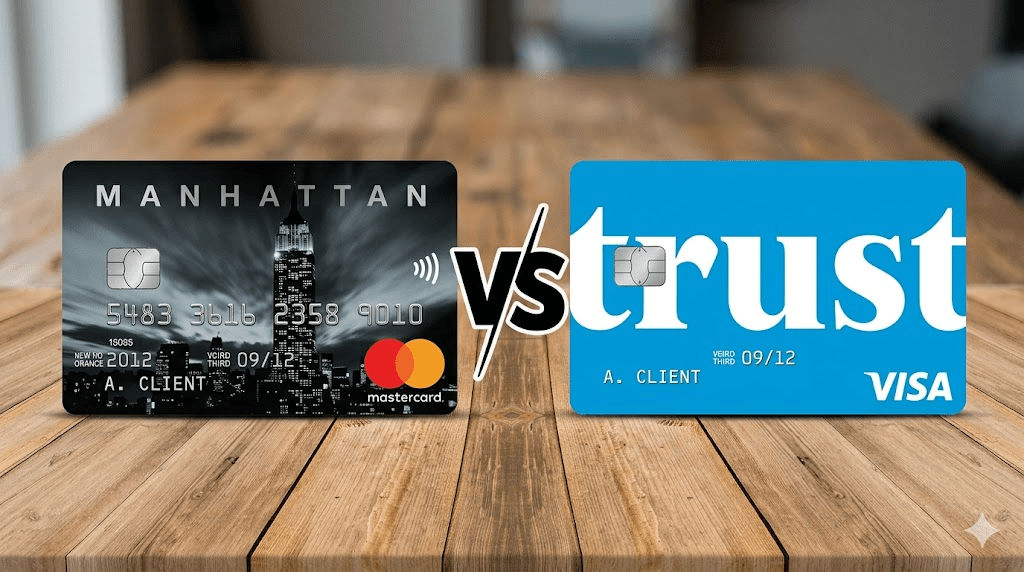
Most traditional credit cards in Singapore hide a nasty surprise in the fine print: Foreign Currency (FCY) Transaction Fees.
When you swipe a standard credit card overseas, the bank doesn’t just convert the currency; they slap a fee on top of it. For Standard Chartered, that fee sits at 3.25%.
Let’s do some quick math on a $1,000 equivalent overseas spend:
| Feature | SC Manhattan Card | Trust Bank Card |
|---|---|---|
| Promised Rebate | + 3.0% | + 0% (or standard Linkpoints) |
| Bank Foreign Fee | – 3.25% | – 0% |
| Net Result | – 0.25% (You lose money) | 0% Fee (Pure market rate) |
Even if you hit the massive $3,000 monthly minimum spend required to unlock the Manhattan card’s 3% tier, the 3.25% fee completely wipes out your entire rebate. You are literally paying the bank a 0.25% premium just to spend your own money.
With Trust Bank, there are absolutely zero foreign transaction fees and zero markups on the exchange rate. What Visa dictates is exactly what you pay.
The Fine Print Traps of the 3% Rebate
Beyond the foreign transaction fees, traditional high-cashback cards make you jump through endless hoops. The Manhattan card has two massive catches that make it incredibly stressful for travel:
- The $3,000 Minimum Spend Trap: To even see that 3% rebate, you must hit a minimum spend of $3,000 in a statement cycle. If you only spend $2,500 on a short getaway, your rebate instantly plummets to a pathetic 1%—meaning you are net losing 2.25% to foreign fees!
- The Quarterly Cap: The cashback is capped at $200 per quarter. If you go on a big family holiday or buy luxury goods overseas and spend $9,000, you don’t get 3% back on the whole amount. You get capped, while the 3.25% transaction fee keeps charging you on every single dollar.
Why Trust Bank Wins Hands Down for Travel
Trust Bank completely removes the mental gymnastics of traveling. Here is why it stays at the front of my wallet when I’m out of Singapore:
- Zero Fees, Period: No foreign transaction fees, no data processing fees, and no hidden spreads.
- Real-Time Transparency: The moment you tap your card at a café in Johor Bahru or a convenience store in Japan, the Trust app sends an instant notification showing the exact conversion to Singapore Dollars. No waiting for the statement to see how badly you got hit.
- No Minimum Spend Pressure: Whether I spend $5 on a street food snack or $500 on a hotel stay, I get the exact same competitive exchange rate.
- No Multi-Currency Wallet Hassle: Unlike traditional travel wallets where you have to constantly monitor rates, buy currencies in advance, and worry about “leftover” balance when you return, Trust charges directly to your account or credit line on demand.
Final Verdict
Chasing credit card rewards is great, but only when the rewards outpace the hidden costs. When it comes to international spending, traditional banks hide behind high transaction fees that turn your “rewards” into a deficit.
Trust Bank keeps it simple: fair rates, zero hidden fees, and zero stress.
Want to try it out for your next trip?
If you haven’t signed up for a Trust Bank account yet, you can get a head start with some sign-up bonuses (like free FairPrice vouchers!). Feel free to use my referral code when you download the app:
Trust Bank Referral Code:
6STTHN7E
Travel Tip: Always Choose To Pay In Local Currency
When you use your Trust Bank card overseas, the golden rule is always choose to pay in the local currency (e.g., JPY in Japan, THB in Thailand) rather than Singapore Dollars (SGD).
Here is the breakdown of why this matters and how to handle it at the counter:
1. Why You Must Choose Local Currency
Choosing SGD triggers a process called Dynamic Currency Conversion (DCC).
- The Trap: When you select SGD, the merchant’s overseas bank determines the exchange rate on the spot. They typically bake in a massive hidden markup, which is often 3% to 12% worse than the standard interbank rate.
- The Trust Card Advantage: Trust Bank card transactions feature 0% foreign exchange fees and convert your money using Visa’s highly competitive wholesale exchange rates. However, if you let the merchant use DCC to charge you in SGD, you bypass Visa’s clean conversion rate entirely and hand control over to the merchant’s provider.
2. How to Deal with the Merchant
While card network rules (Visa/Mastercard) dictate that merchants must give you a choice, many credit card terminals default to SGD automatically, or the cashier might select SGD thinking they are doing you a favor.
- Be Proactive: Before tapping or inserting your card, clearly tell the merchant: “Local currency, please” or name the specific currency (e.g., “Please charge in Yen”).
- Check the Screen: Look at the card terminal before completing the payment. If the screen asks you to choose between the local currency and SGD, always select the local currency button.
- Inspect the Receipt: If the merchant hands you a receipt showing the amount in SGD with a printed exchange rate breakdown, DCC has been applied. You have the right to ask them to void the transaction and charge you again properly in the local currency.
Summary: Trust Bank gives you excellent zero-markup foreign exchange rates, but you lose that benefit entirely if you let the merchant bill you in SGD. Stick to the local currency every time.
*** SEE MY TRADES & PORTFOLIO ON PATREON ***
If you are interested to find out more about my options trades and investment portfolio, I will be updating them on Patreon (on the same day I made the trades), so do follow me there if you need some reference or inspiration.
Click here to access my Patreon page
*** FOLLOW US ON SOCIAL MEDIA ***
Follow me on Facebook and LinkedIn, to get notified of my latest posts on social media. Or subscribe to my blog (scroll to the bottom of the page) to have my new posts sent directly to your mailbox.
We also have a community passionate about investing, trading, and personal finance over our Telegram or Facebook group. So, join us there for a good discussion, post queries, or simply share your financial knowledge.
*** FREE BEGINNER GUIDE TO OPTIONS TRADING ***
Keen to learn about options trading but do not wish to pay for expensive courses, this newbie guide will help gain the knowledge and fundamentals to understand options better. And it’s totally free!
The Newbie’s Guide To Options Trading
*** FREE MOTIVATIONAL BOOK ***
If earning more money from your investment does not excite you anymore, you may be seeking a purpose that brings fulfillment and meaning in life. I have written a motivational book that may be useful to you in some ways.
Click here to download my motivational book
*** BUY ME A CUP OF COFFEE ***
If my blog has benefited you in some ways and you would like to offer a token of appreciation, you may do so via this page. Thank you very much for your support!
Click here to support the site
*** MUST-READ BLOG POSTS ***
The day that I lost everything….
I Was Margin Called, IBKR Liquidated ALL My Positions & Realised S$540k (USD400k) Worth Of Losses
Sharing these 6 fatal mistakes in investing and options trading so you can avoid these pitfalls
The 6 Fatal Investing/ Trading Mistakes That Made Me Lose More Than $1M
After accumulating more than 600k of unrealized losses on my portfolio, I wrote this article to encourage friends and investors who are also losing a lot of money to the market.
If You Are Feeling Depressed From Losing Lots Of Money In The Stock Market, Here’s An Article For You
The precious 6 lessons I learnt after cutting more than half a million of losses in the stock market through bad investments and risky trades.
6 Lessons Learnt After Losing 551k In 10 Years Of Investing & Options Trading | What Newbies Should Know They Start Investing/ Trading
In the 10 years of my investing journey, I have made many mistakes but also learned many lessons from these mistakes. I compiled the 10 most valuable lessons that I have learned and may they help you succeed in your investing journey.
Happy 10 Years Of Investing | 348k (Realised) Profit, 635k (Unrealized) Loss & 10 Lessons Learnt
How I managed to build a 1M investment/ trading portfolio despite coming from humble beginnings.
How A Poor Kid Got To A 1M Investment Portfolio | Tips & Principles Of Building Wealth
I did these 10 side hustles while holding a full-time job, so I share them here so you can be inspired to grow your wealth through a side hustle that you enjoy.
I Did These 10 Side Hustles While Working Full Time | 10 Side Hustle Ideas To Help You Earn An Extra Income
Struggling with inflation and high cost of living? Try these 10 methods to help you save money and accumulate more savings for investments or rainy days.
10 Ways To Save Money To Help You Fight Inflation & Rising Costs Of Living
Why I am building $120,000 of cash reserves in Singapore Savings Bonds (SSB) & 5 reasons why I think SSB is a worthy low or zero-risk investment that you can consider.
Why I Am Building $120,000 Of Cash Reserves In Singapore Savings Bonds (SSB)? | 5 Reasons Why SSB Is A Worthy Low-Risk Investment

