
This is the part 2 explanation of the 4 Vertical Spread options strategies where I will explain more in-depth my favorite vertical spread strategy for bullish play, which is the Bull PUT Spread Strategy.
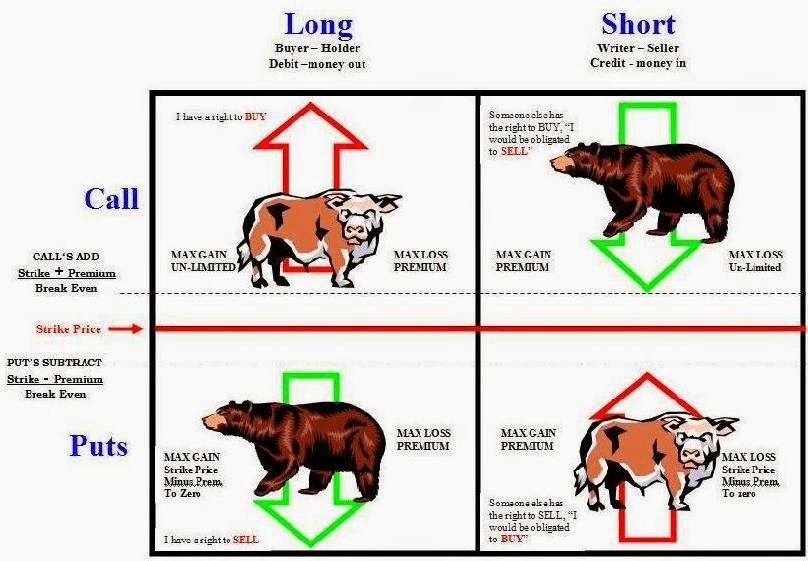
The 4 vertical spread strategies are summarised below:

A bull PUT spread is an options strategy that an investor uses when they expect a moderate rise in the price of the underlying asset. The strategy employs two put options to form a range, consisting of a high strike price and a low strike price.
In the previous article, I mentioned that a bullish strategy of using PUT Options is to sell PUT options and thus in this Bull PUT Spread, selling PUT is predominant, which will result in net credit received. In order to have net credit received, the premium received must be greater than the premium paid.
Link to the previous article:
Vertical Spreads Options Strategies Explained For Newbies | A Simple Way To Understand And Remember Vertical Spreads
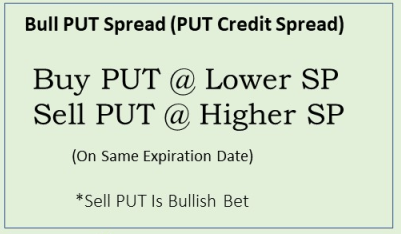
Using the direct correlation between PUT options premium and strike price, i.e. higher strike price = higher premium and vice-versa, the sell PUT leg will be at a higher strike price (higher premium) than the buy PUT leg (lower premium).
As such, the buy PUT will happen at a lower SP while the sell PUT will happen at a higher SP, as summarized below:
I hope this helps in your understanding and remembering of the Bull PUT Spread. This is a powerful strategy that you can use to long the market when the market is rising or there is an obvious upward trend while avoiding the collateral required to buy 100 shares from a single-legged sell PUT contract.
What Is The Max Gain, Loss & Breakeven?
The Maximum gain of a Bull PUT Spread is the premium that you receive when you open up the contract. This happens when both contracts expire OTM and become worthless.
The Maximum loss of a Bul PUT Spread is the difference of the strike price multiplied by 100 per contract, minus the premium you receive for the contract.
Max Loss = (Difference in SP x 100) – premium received for contract
This is when both contracts expire ITM, thus you have to sell the shares at the lower price and buy the shares at the higher price.
The Breakeven Price is the higher SP – the premium price per share.
Bull PUT Spread Example
Let’s assume Google’s parent company, Alphabet, is currently trading at $100. An option trader expects it to trade up to $103 in one month due to seasonality and mid-term election effect.
While she would like to write (sell) puts on the stock, she is concerned about its potential downside risk and the huge collateral required to sell a cash secured PUT on Alphabet.

The trader therefore writes three contracts of the $100 puts – trading at $3 – expiring in one month, and simultaneously buys three contracts of the $97 puts – trading at $1 – also expiring in one month.
Since each option contract represents 100 shares, the option trader’s net premium income (credit received) is:
($3 x 100 x 3) – ($1 x 100 x 3) = $600
(Commissions are not included in the calculations below for the sake of simplicity.)
Consider the possible scenarios a month from now in the final minutes of trading on the option expiration date:
Scenario 1: Alphabet is trading at $102 (Max Gain)
In this case, the $100 and $97 puts are both out of the money and will expire worthless.
The trader therefore gets to keep the full amount of the $600 net premium (less commissions).
A scenario where the stock trades above the strike price of the short put leg is the best possible scenario for a bull put spread.
Scenario 2: Alphabet is trading at $98 (Breakeven)
In this case, the $100 put is in the money by $2, while the $97 put is out of the money and therefore worthless.
The trader therefore has two choices: (a) close the short put leg at $2, or (b) buy the stock at $100 to fulfill the obligation arising from exercising the short put.
The former course of action is preferable, since the latter would incur additional commissions.
Closing the short put leg at $2 would entail an outlay of $600 (i.e. $2 x 3 contracts x 100 shares per contract). Since the trader received a net credit of $600 when initiating the bull put spread, the overall return is $0.
The trader therefore breaks even on the trade but is out of pocket to the extent of the commissions paid.
Scenario 3: Alphabet is trading at $93 (Max Loss)
In this case, the $100 put is in the money by $7, while the $97 put is in the money by $4.
The loss on this position is therefore: [($7 – $4) x 3 x 100] = $900.
But since the trader received $600 when initiating the bull put spread, the net loss = $600 – $900
= -$300 (plus commissions).

Advantages of a Bull Put Spread
1. Risk is limited to the difference between the strike prices of the short put and long put. This means that there is little risk of the position incurring large losses, as would be the case with puts written on a sliding stock or market.
2. The bull put spread takes advantage of time decay, which is a very potent factor in option strategy. Since most options either expire or go unexercised, the odds are on the side of a put writer or bull put spread originator.
3. The bull put spread can be tailored to one’s risk profile. A relatively conservative trader may opt for a narrow spread where the put strike prices are not very far apart, as this will reduce the maximum risk as well as the maximum potential gain of the position. An aggressive trader may prefer a wider spread to maximize gains even if it means a bigger loss should the stock decline.
4. Since it is a spread strategy, a bull put spread will have lower margin requirements compared to put writes.
Disadvantages of a Bull Put Spread
1. Gains are limited in this option strategy and may not be enough to justify the risk of loss if the strategy does not work out.
2. There is a significant risk of assignment on the short put leg before expiration, especially if the stock slides. This may result in the trader being forced to pay a price well above the current market price for a stock. This risk is greater if the difference is substantial between the strike prices of the short put and long put in the bull put spread.
3. As noted earlier, a bull put spread works best in markets trading sideways to marginally higher, which means that the range of optimal market conditions for this strategy is quite limited. If markets surge, the trader would be better off buying calls or using a bull call spread; if markets plunge, the bull put spread strategy will generally be unprofitable.
<< Subscribe to my blog to have all these articles delivered directly to your email address >>
*** SEE MY TRADES & PORTFOLIO ON PATREON ***
If you are interested to find out more about my options trades and investment portfolio, I will be updating them on Patreon (on the same day I made the trades), so do follow me there if you need some reference or inspiration.
*** EARN FREE MONEY ***
Sign up for WeBull Securities Brokerage and sure-win free shares:
Receive Free Money When You Sign Up With WeBull Securities Platform
*** FREE BEGINNER GUIDE TO OPTIONS TRADING ***
Keen to learn about options trading but do not wish to pay for expensive courses, this newbie guide will help gain the knowledge and fundamentals to understand options better. And it’s totally free!
The Newbie’s Guide To Options Trading
*** FREE MOTIVATIONAL BOOK ***
If earning more money from your investment does not excite you anymore, you may be seeking a purpose that brings fulfillment and meaning in life. I have written a motivational book that may be useful to you in some ways. You can also download a free copy here:
https://learninginvestmentwithjasoncai.com/finding-the-magical-realm-of-happiness-motivational-book
*** FOLLOW US ON SOCIAL MEDIA ***
Follow me on Facebook, LinkedIn, to get notified of my latest posts on social media. Or subscribe to my blog (scroll to the bottom of the page) to have my new posts sent directly to your mailbox.
*** BUY ME A CUP OF COFFEE ***
If my blog has benefited you in some ways and you would like to offer a token of appreciation, you may do so via this page. Thank you very much for your support!
*** MUST-READ BLOG POSTS ***
After accumulating more than 600k of unrealized losses on my portfolio, I wrote this article to encourage friends and investors who are also losing a lot of money to the market.
If You Are Feeling Depressed From Losing Lots Of Money In The Stock Market, Here’s An Article For You
In the 10 years of my investing journey, I have made many mistakes but also learned many lessons from these mistakes. I compiled the 10 most valuable lessons that I have learned and may they help you succeed in your investing journey.
Happy 10 Years Of Investing | 348k (Realised) Profit, 635k (Unrealized) Loss & 10 Lessons Learnt
The precious 6 lessons I learnt after cutting more than half a million of losses in the stock market through bad investments and risky trades.
6 Lessons Learnt After Losing 551k In 10 Years Of Investing & Options Trading | What Newbies Should Know They Start Investing/ Trading
How I managed to build a 1M investment/ trading portfolio despite coming from humble beginnings.
How A Poor Kid Got To A 1M Investment Portfolio | Tips & Principles Of Building Wealth
I did these 10 side hustles while holding a full-time job, so I share them here so you can be inspired to grow your wealth through a side hustle that you enjoy.
I Did These 10 Side Hustles While Working Full Time | 10 Side Hustle Ideas To Help You Earn An Extra Income
Struggling with inflation and high cost of living? Try these 10 methods to help you save money and accumulate more savings for investments or rainy days.
10 Ways To Save Money To Help You Fight Inflation & Rising Costs Of Living
Why I am building $120,000 of cash reserves in Singapore Savings Bonds (SSB) & 5 reasons why I think SSB is a worthy low or zero-risk investment that you can consider.
Why I Am Building $120,000 Of Cash Reserves In Singapore Savings Bonds (SSB)? | 5 Reasons Why SSB Is A Worthy Low-Risk Investment
Sharing why I am doing Dollar Cost Average (DCA) into SPY and QQQ ETF for long-term investments and a step-by-step guide to doing it automatically with Interactive Brokers.
Why I Am Doing DCA (Automatically) For SPY & QQQ For My Long Term Investment? (20% ~ 30% Upside Potential) | Step By Step Guide To Activating Automatic Recurring Investment On IBKR
Can options trading provide you with extra sideline income every month? In this post, I share my experience of generating income from options trading over the last 3 years.
Options Trading For Passive Income: Truth Or Myth?
 Learning Investment With Jason Cai
Hi Jason.
Glad you are progressing along your option discovery. In scenario 2, there seems to be a typo. Obligation is to buy the stocks @100. Not at 98.
Some months ago, when you were running your cash secured puts, I mentioned capital is used inefficiently to run the strategy. With bull put spreads, I think you can better appreciate my point now.
Great you have discovered more tools in the toolbox. There are more tools ahead which in my opinion, is superior to the cash secured and put credit spreads. No fret, you will also discover them yourself one day.
Finally hope your LEAP portfolio is holding up well despite the recent craziness with big techs.
LikeLike
Hey Raymond, thanks for taking the time to read through and for pointing out the typo. My LEAPS portfolio is down 96% down as of today, I am treating them as lottery tickets now. Hope you are doing well with your trades thus far!
LikeLike